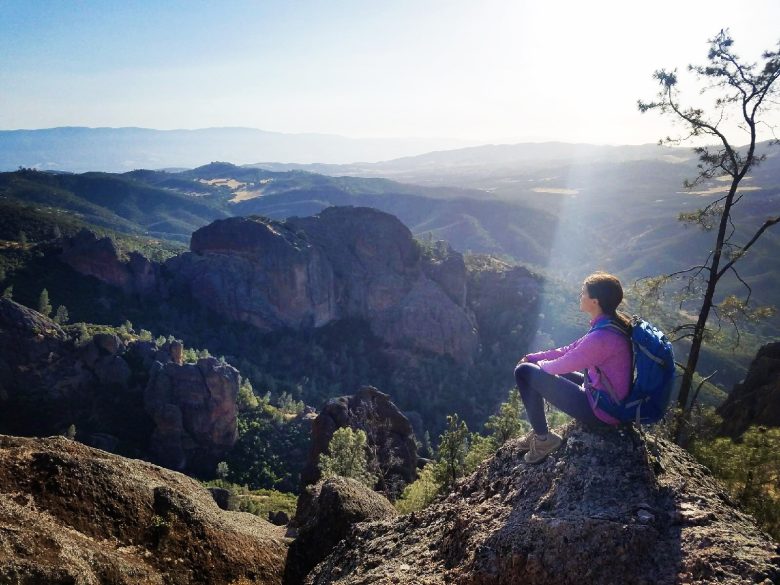
Tucked away in Central California, Pinnacles National Park is one of those places that completely surprises you.
I visited in June 2018 and honestly had no idea what to expect. But within minutes of arriving, I was hooked!
Towering rock spires, dramatic caves, incredible hiking trails, and the unforgettable sight of endangered California condors soaring overhead made this one of the coolest national parks I’ve explored.
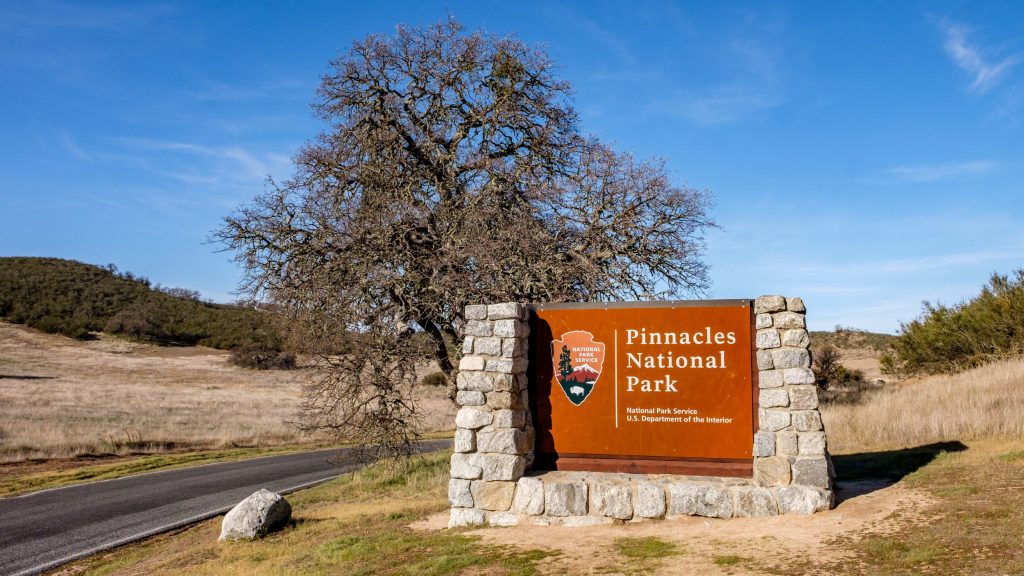
If you’re looking for a California national park that feels a little more off-the-radar (and a lot less crowded than Yosemite), Pinnacles deserves a spot on your list.
Here’s everything you need to know about visiting Pinnacles National Park, including the best hikes, where to stay, camping tips, when to visit, and how to spot those famous condors.
Acknowledging the Land
Before diving in, I want to acknowledge that Pinnacles National Park is located on the ancestral lands of the Amah Mutsun Tribal Band and the Chalon and Mutsun peoples, who have stewarded this region for generations.
Like many national parks, the landscapes we enjoy today hold deep cultural and historical significance long before they became protected public lands. Taking a moment to recognize that history adds another layer of meaning to visiting places like Pinnacles.
Where is Pinnacles National Park?
Pinnacles National Park is located in Central California, roughly:
- 2 hours south of San Francisco
- 1.5 hours east of Monterey
- 4.5 hours north of Los Angeles
One of the most important things to know before visiting is that the park has two separate entrances:
East Entrance
The east side is the most popular and where you’ll find:
- The campground
- Visitor center
- Bear Gulch area
- Easier access to many major trails
West Entrance
The west side is quieter and more rugged, with access to:
- Balconies Cave
- Chaparral trailhead
- Scenic canyon hikes
And this surprises a lot of first-time visitors: there is no road connecting the east and west entrances through the park. If you want to access both sides, you’ll need to drive around externally, which takes about 1.5 hours.
Best Time to Visit Pinnacles National Park
The best time to visit Pinnacles National Park is spring or fall.
Spring (March–May)
This is arguably the best season to visit because:
- Wildflowers bloom across the hillsides
- Temperatures are ideal for hiking
- The landscape is green and vibrant
- Condor sightings are common
Summer (June–August)
I visited in June, and while the park was absolutely stunning, it got HOT quickly. Temperatures often climb into the 90s and beyond, and many trails have very little shade.
If visiting in summer:
- Start hiking at sunrise
- Carry lots of water
- Avoid exposed trails midday
Fall & Winter
Fall brings cooler temperatures and fewer crowds, while winter offers peaceful hiking conditions and dramatic skies.
Seeing California Condors at Pinnacles National Park
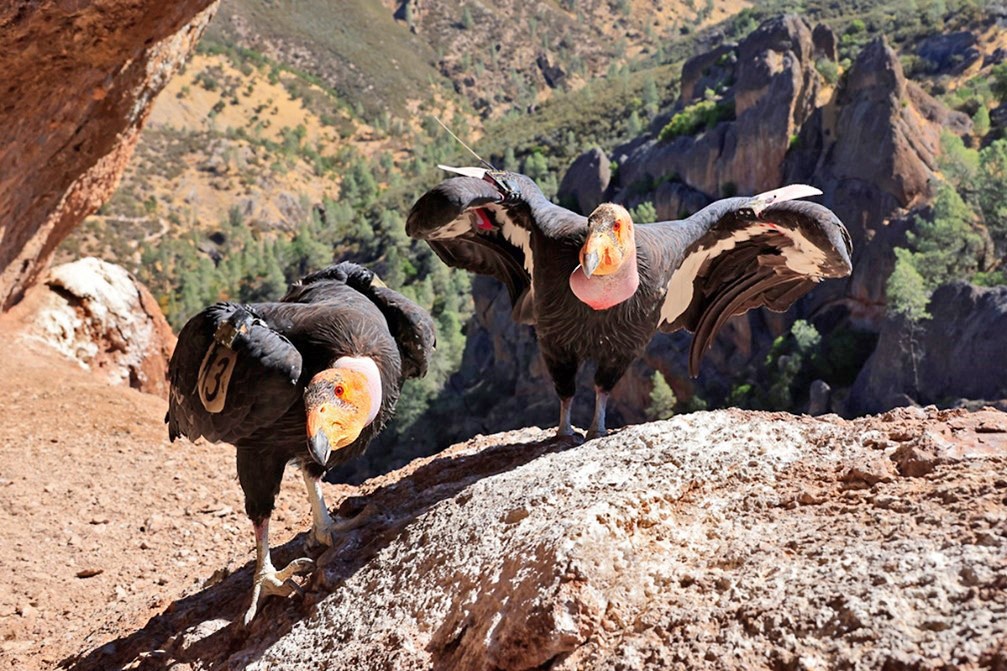
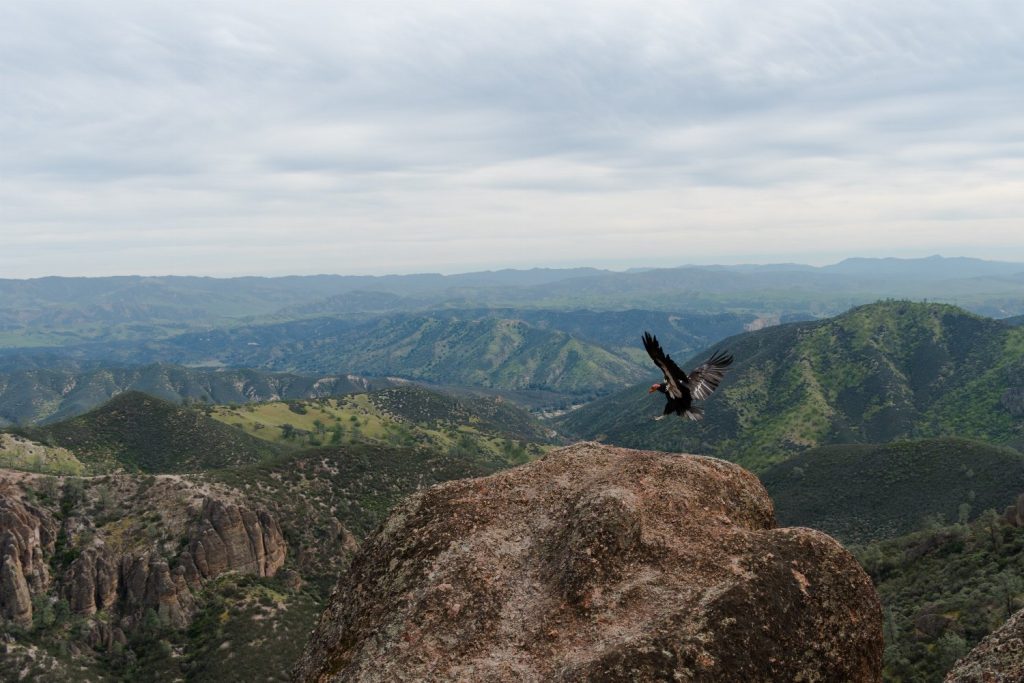
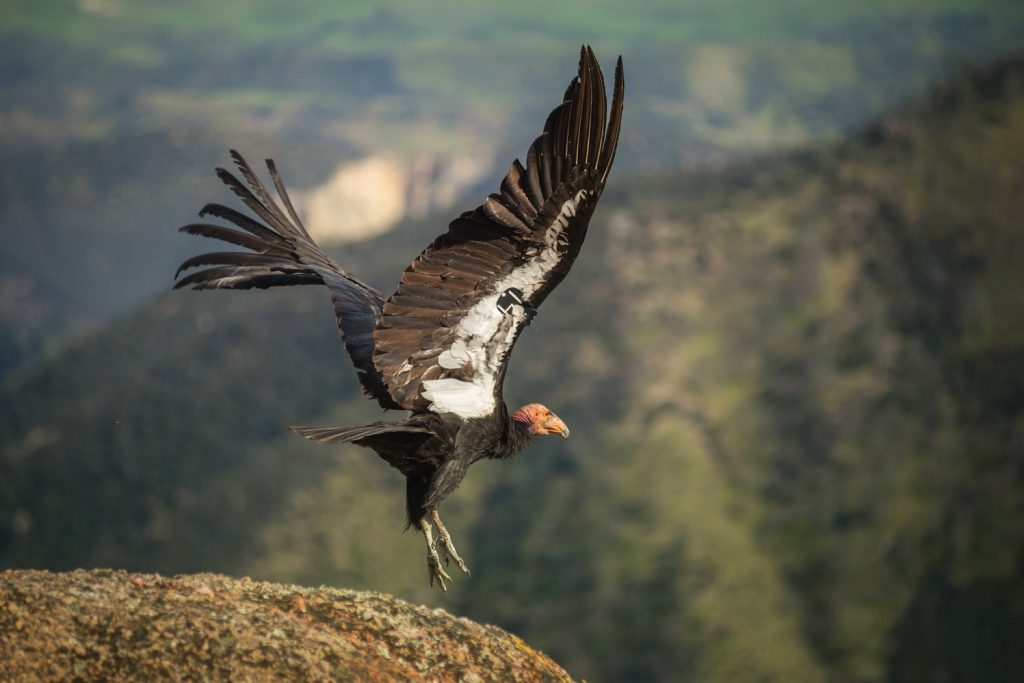
One of the biggest reasons people visit Pinnacles National Park is the chance to see the endangered California condor in the wild.
And honestly? It was one of the coolest wildlife experiences I’ve ever had.
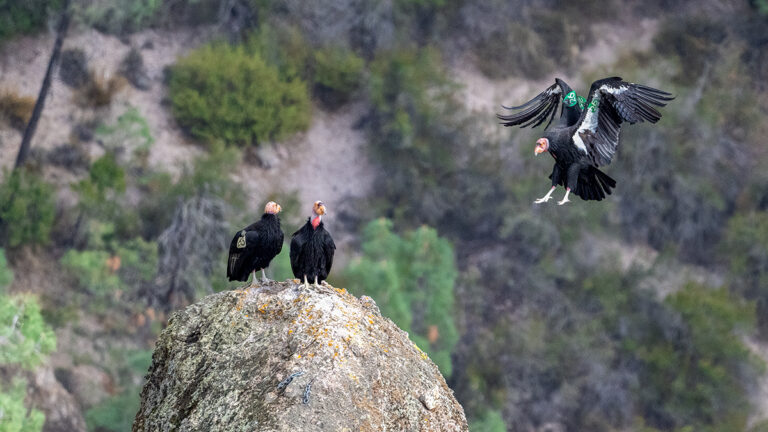
With wingspans approaching 10 feet, condors are impossible to miss once you spot them gliding above the cliffs and rock spires. Pinnacles plays a major role in the California condor recovery program and is one of the best places in the state to see them naturally.
Tips for Spotting Condors
- Look high above ridgelines and cliffs
- Morning and late afternoon are often best
- Bring binoculars if you have them
- The High Peaks area is one of the best viewing locations
One ranger told us that once you notice how massive they are compared to vultures, you’ll never confuse them again.
Best Hikes in Pinnacles National Park
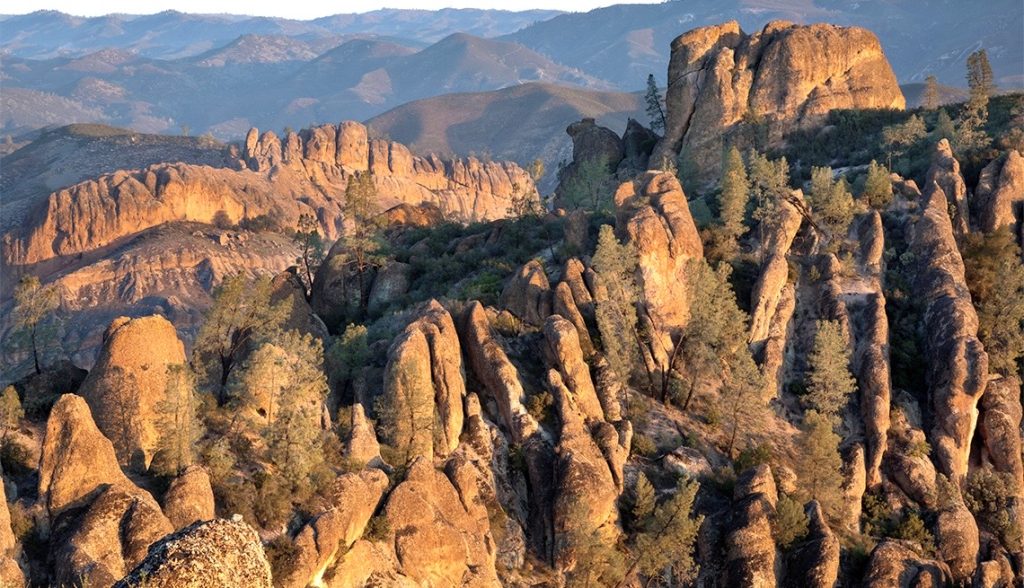
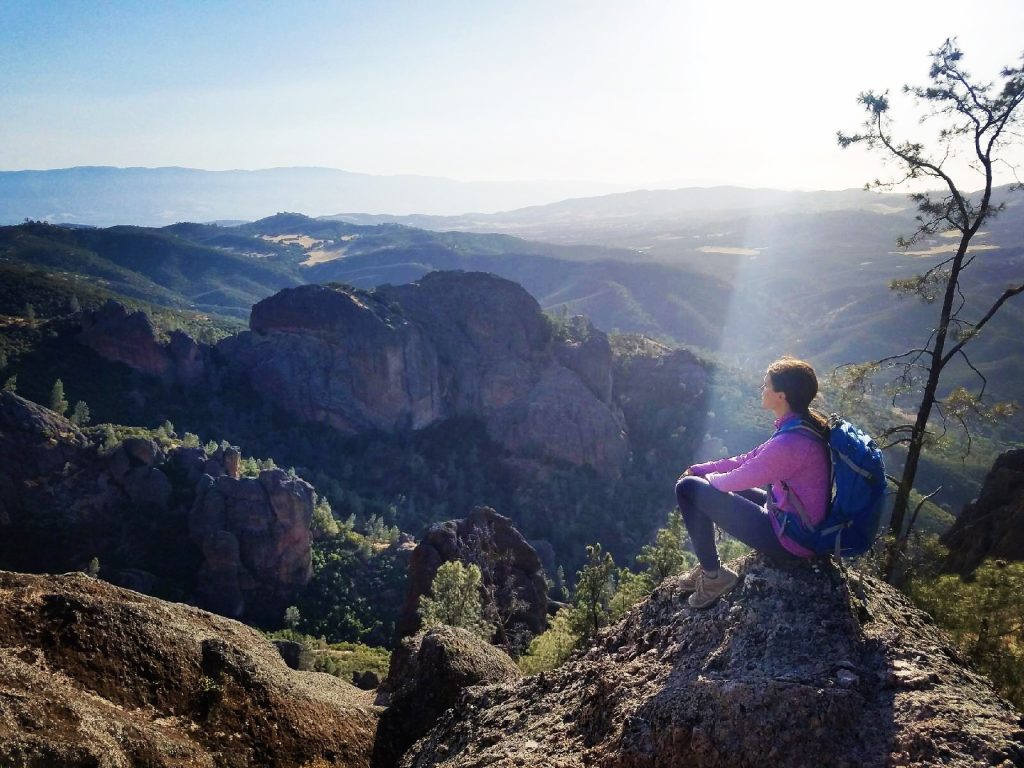
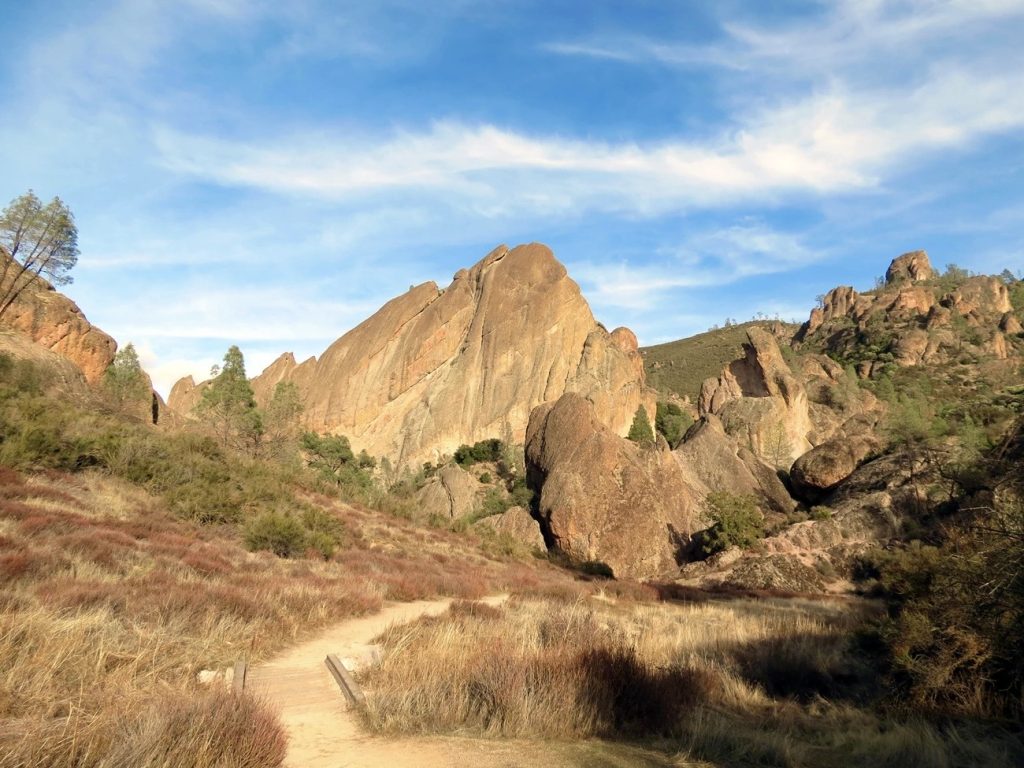
The hiking in Pinnacles is what truly makes the park special. Trails weave through volcanic rock formations, narrow canyons, caves, and high ridgelines with incredible panoramic views.
Here are the best hikes in Pinnacles National Park, including trail distance, elevation gain, and what to expect.
High Peaks Trail Loop
Distance: ~6.5 miles loop
Elevation Gain: ~1,450 feet
Difficulty: Moderate to strenuous
This is the iconic Pinnacles hike and easily my favorite trail in the park.
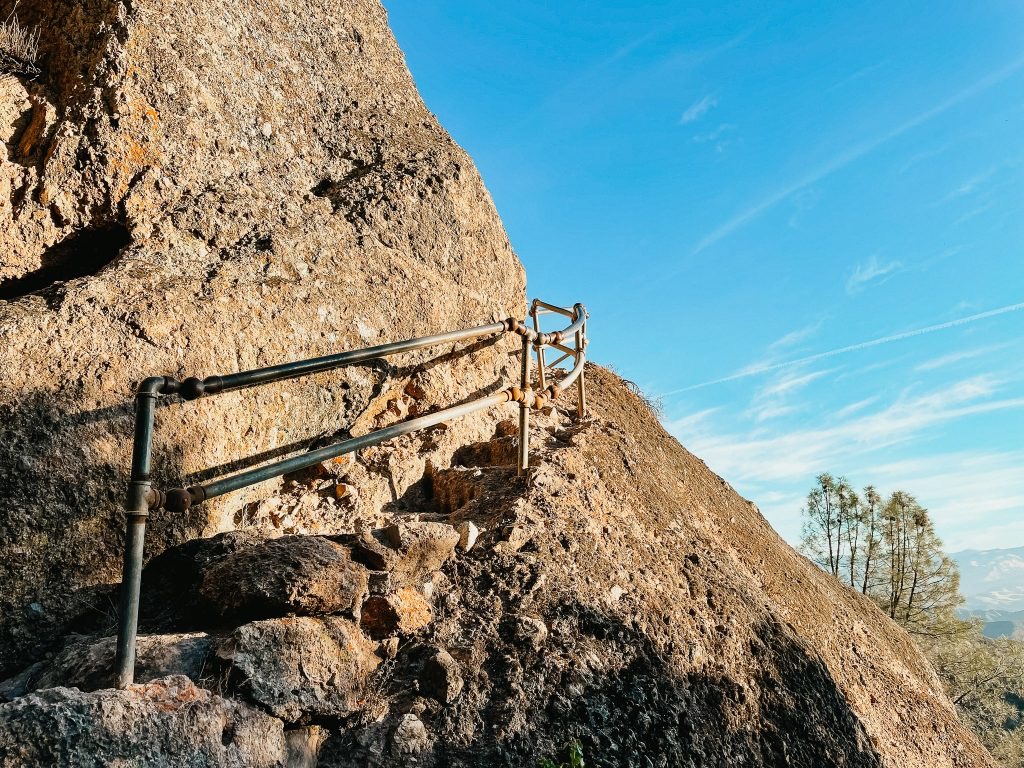
The High Peaks Trail climbs through steep volcanic rock formations with staircases carved directly into the cliffs. In several spots, the trail hugs dramatic drop-offs with sweeping views across the park.
Highlights
- Incredible panoramic views
- Narrow cliffside stair sections
- Excellent condor spotting opportunities
- Dramatic rock spires
Good to Know
If you’re afraid of heights, some sections may feel exposed. Nothing is overly technical, but there are steep drop-offs and narrow pathways.
I’d strongly recommend starting this hike early in warmer months because the exposed sections heat up quickly.
Bear Gulch Cave Trail
Distance: ~1.5 to 2 miles round trip
Elevation Gain: ~300 feet
Difficulty: Easy to moderate
This trail is short, adventurous, and one of the most unique hikes in the park.
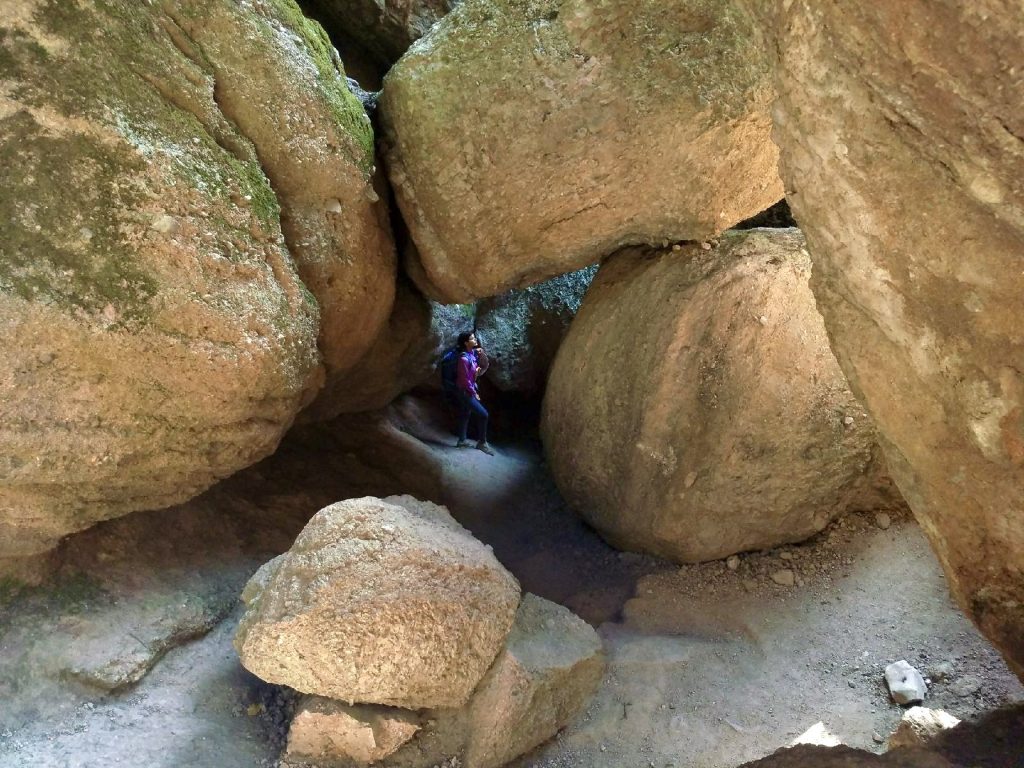
The Bear Gulch Cave Trail takes you through talus caves formed by giant boulders wedged together over time. Inside, you’ll walk through dark passageways, rocky tunnels, and cool cave sections that feel completely different from the exposed landscape outside.
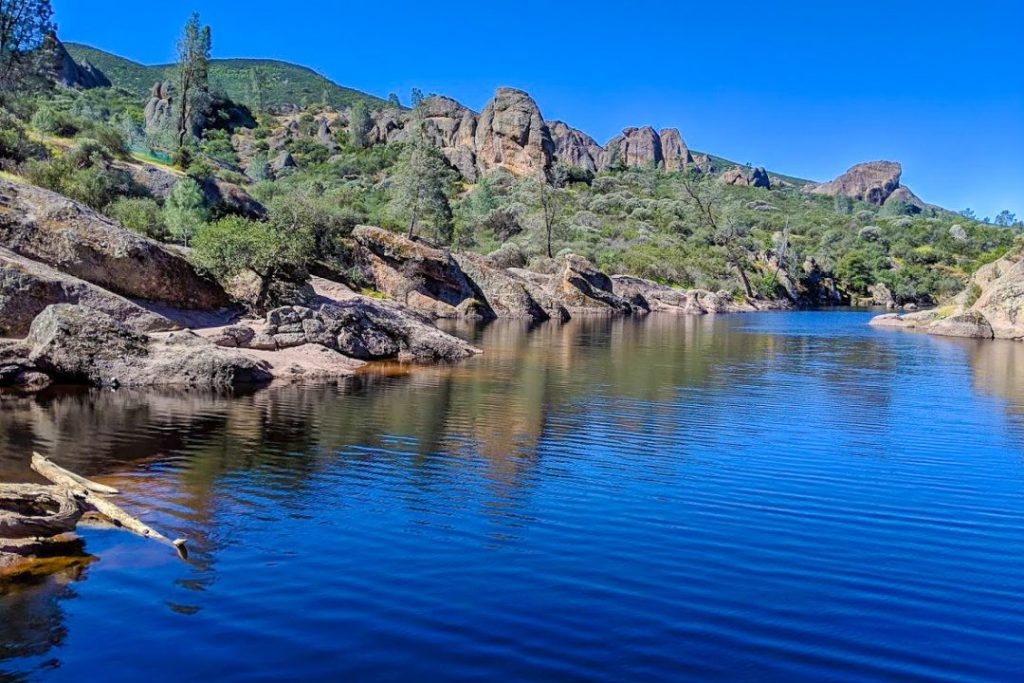
At the end of the trail, you’ll reach the scenic Bear Gulch Reservoir surrounded by rocky cliffs.
Highlights
- Cave exploration
- Cooler temperatures inside
- Family-friendly adventure
- Beautiful reservoir views
Important Tip
The caves sometimes close seasonally to protect Townsend’s big-eared bats, so check conditions before your visit.
Balconies Cave Trail
Distance: ~2.4 miles loop
Elevation Gain: ~300 feet
Difficulty: Moderate
Located on the west side of the park, the Balconies Cave Trail was one of the most unexpectedly fun hikes we did.
This route combines:
- Boulder scrambling
- Cave tunnels
- Narrow canyon walls
- Creek crossings
The scenery here feels much more rugged and secluded compared to the east side.
Highlights
- Talus caves and tunnels
- Dramatic canyon scenery
- Fewer crowds
- Great summer option due to cave shade
Bring a flashlight or use your phone light for darker cave sections.
Condor Gulch Trail
Distance: ~3.7 miles round trip
Elevation Gain: ~1,100 feet
Difficulty: Moderate
If you want incredible views without committing to the full High Peaks Loop, Condor Gulch is a great option.
The trail steadily climbs uphill to scenic overlooks with sweeping views across the park’s rocky terrain.
Highlights
- One of the best condor viewing areas
- Amazing sunrise lighting
- Less intense than High Peaks
- Great photography spots
This trail pairs well with portions of the High Peaks Trail if you want a longer adventure.
Moses Spring Trail
Distance: ~2.2 miles round trip
Elevation Gain: ~500 feet
Difficulty: Easy to moderate
This shorter trail is perfect if you want a quick but scenic hike.
The route passes:
- Small caves
- Mossy rock walls
- Seasonal waterfalls
- Lush canyon scenery
It’s also one of the better options for families or casual hikers.
Camping at Pinnacles National Park
If you can stay overnight, do it.
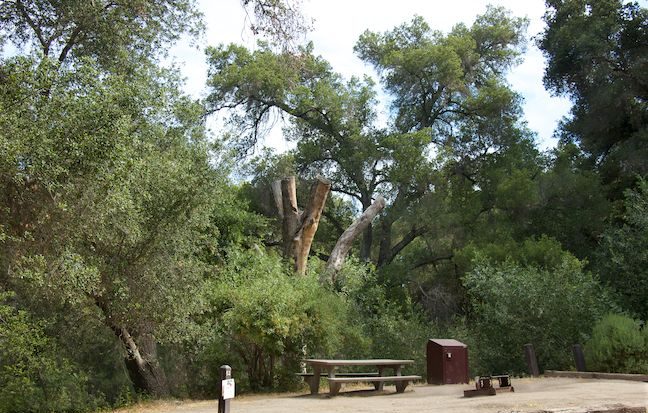
The campground on the east side of the park makes it much easier to:
- Beat the heat with early morning hikes
- Experience sunrise and sunset
- Enjoy quieter trails before day visitors arrive
Camping options include:
- Tent sites
- RV hookups
- Group sites
- Cabins
The campground also has:
- Showers
- A small camp store
- Swimming pool access during warmer months
Reservations are highly recommended during spring and weekends.
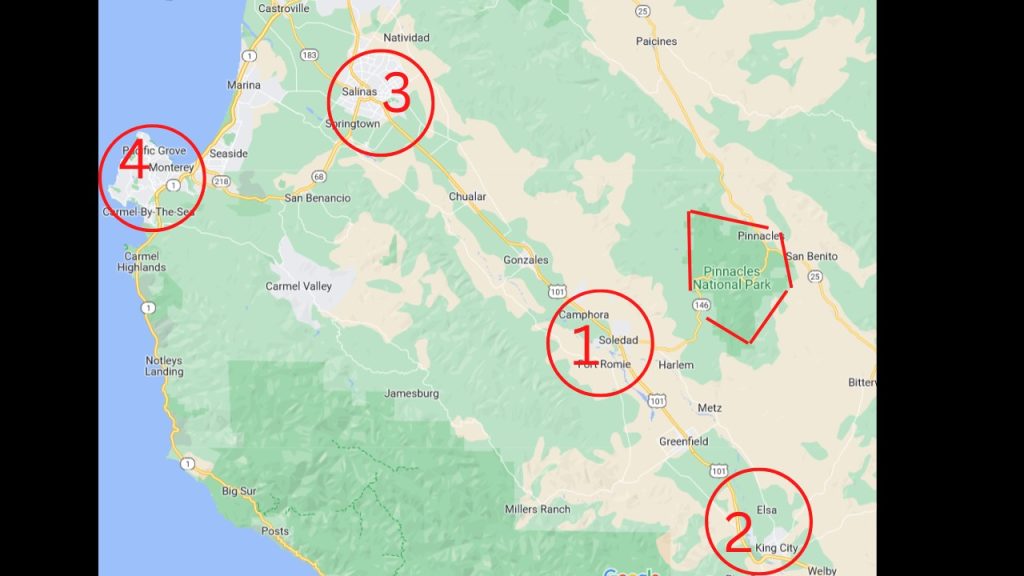
Where to Stay Near Pinnacles National Park
If camping isn’t your thing, there are several nearby towns worth considering.
1. Soledad
2. King City
3. Salinas
4. Monterey
Tips for Visiting Pinnacles National Park
Here are a few things I learned during my visit:
- Start hikes early, especially in summer
- Bring more water than you think you’ll need
- Wear hiking shoes with good grip
- Download offline maps before arriving
- Check cave closures ahead of time
- Pack a flashlight for cave hikes
- Keep your eyes on the skies for condors
Also: don’t underestimate this park. The hikes can be steeper and hotter than they initially look.
Is Pinnacles National Park Worth Visiting?
Absolutely!
Pinnacles National Park may be one of California’s least-visited national parks, but that’s honestly part of what makes it so special.
It feels adventurous, uncrowded, and wildly unique compared to many of the state’s more famous parks.
Between the volcanic rock formations, cave hikes, incredible views, and the unforgettable experience of seeing California condor soaring overhead, Pinnacles ended up becoming one of my favorite national park experiences in California.
If you love unique hikes, hidden gems, and dramatic landscapes, Pinnacles National Park absolutely deserves a spot on your bucket list.