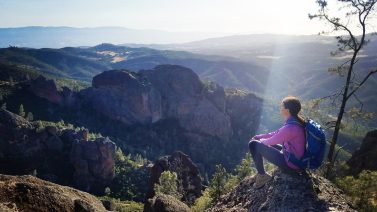
At Lassen Volcanic National Park, the earth literally hisses beneath your feet. Steam rises from cracks in the ground, mud pots bubble like something out of a science fiction movie, and entire mountains were shaped by violent eruptions.
Lassen Peak is one of the world’s largest plug dome volcanoes… formed when thick lava piled up near a volcanic vent instead of flowing far away. The mountain last erupted between 1914 and 1917, making it one of the most recent volcanic eruptions in the continental United States.
The wild thing about hiking here is that the landscape doesn’t feel ancient and inactive. It feels alive.
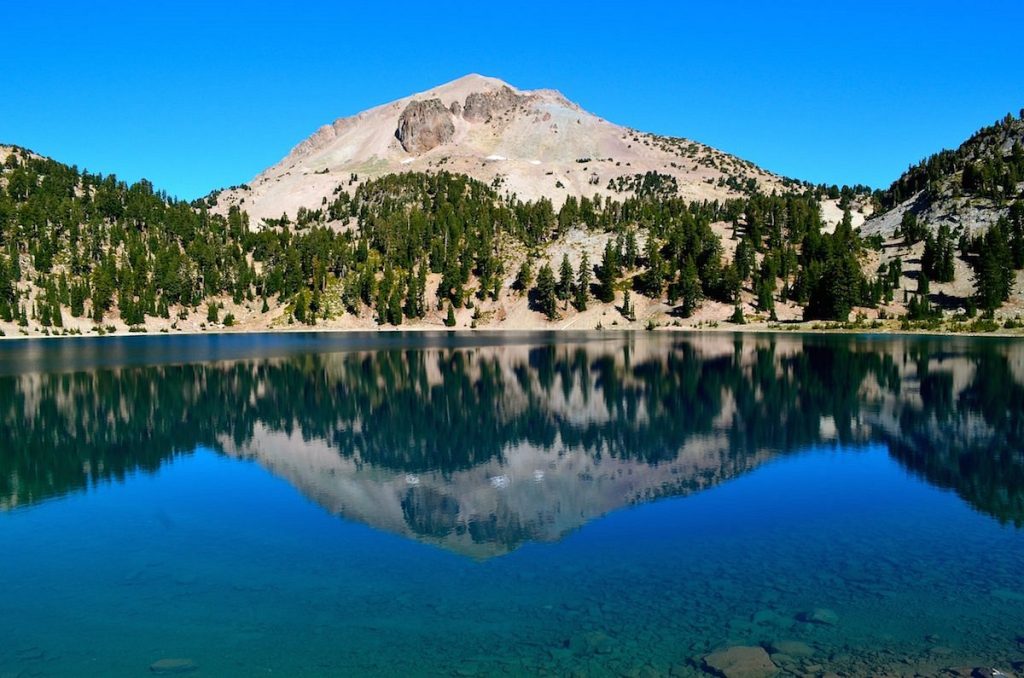
One minute you’re walking through alpine forests and crystal-clear lakes, and the next you’re staring into steaming geothermal pools that smell strongly of sulfur. It’s one of the most unique hiking destinations in California… and somehow still one of the least crowded national parks in the state.
If you love dramatic landscapes, weird geology, and trails that feel genuinely different from anywhere else, Lassen deserves a spot high on your hiking bucket list.
Why Lassen Is So Unique
Most people don’t realize that Lassen is home to all four major volcano types:
- shield volcanoes
- plug dome volcanoes
- cinder cones
- stratovolcanoes
That makes the park basically a giant outdoor geology classroom… except instead of sitting at a desk, you’re hiking through lava fields and steaming hydrothermal basins.
The park is still geologically active today thanks to heat lingering below the surface from the region’s volcanic system. That underground heat powers the park’s famous hydrothermal areas, including fumaroles, boiling springs, and bubbling mud pots.
And yes, the smell of sulfur is very real.
The Best Hikes for Exploring Lassen’s Volcanic Landscape
Bumpass Hell Trail
Distance: 3 miles round trip
Elevation Gain: 300 feet
Difficulty: Easy to Moderate
If you only do one hike in Lassen, make it the trail to Bumpass Hell.
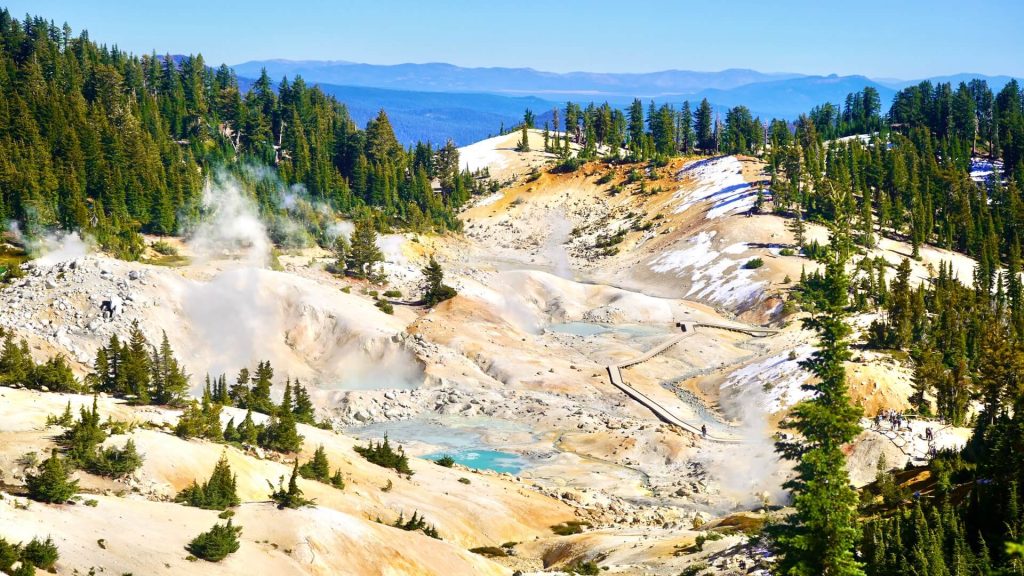
Despite the slightly ridiculous name, this is one of the coolest geothermal areas in the entire National Park system. The trail winds through mountain scenery before suddenly opening into a steaming basin filled with turquoise pools, boiling mud pots, and roaring fumaroles.
A fumarole, by the way, is basically a vent where steam and volcanic gases escape from the earth. Lassen has plenty of them, and seeing steam rise directly out of the ground is both fascinating and slightly unsettling.
The boardwalk through Bumpass Hell feels almost otherworldly. The ground is stained yellow and orange from minerals, steam drifts across the trail, and the whole place looks more like Iceland than Northern California.
Just don’t step off the boardwalk. The water here is hot enough to seriously injure you.
Hiking Through Ancient Lava Flows
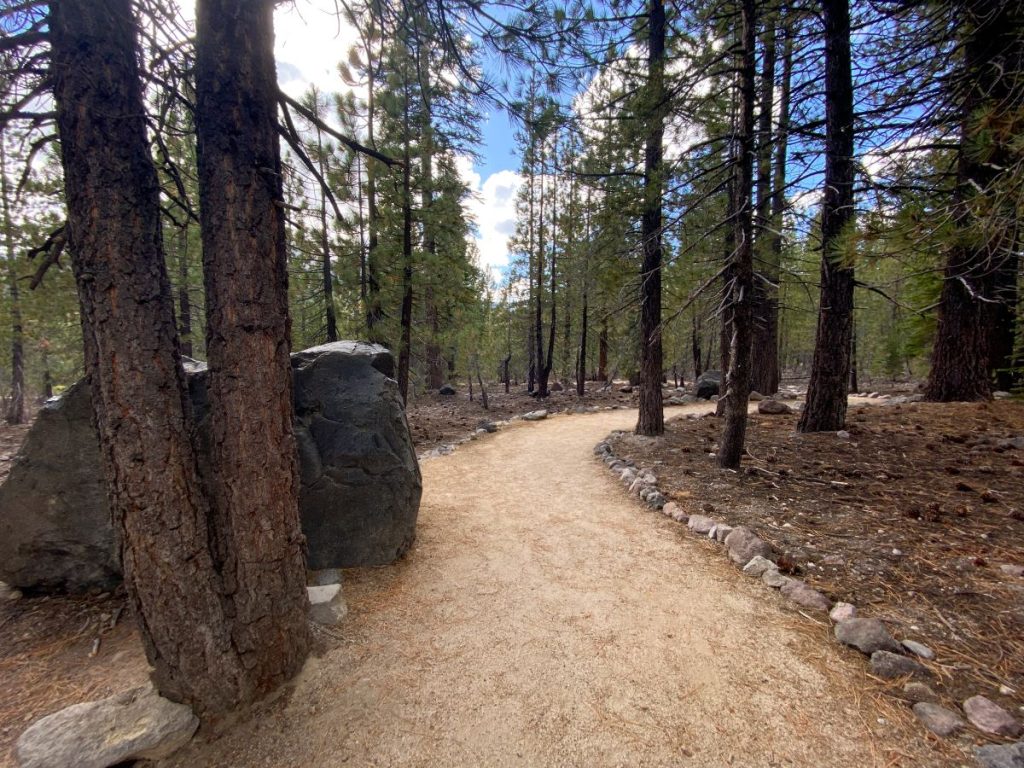
One of the most fascinating things about Lassen is how clearly you can still see the effects of past eruptions.
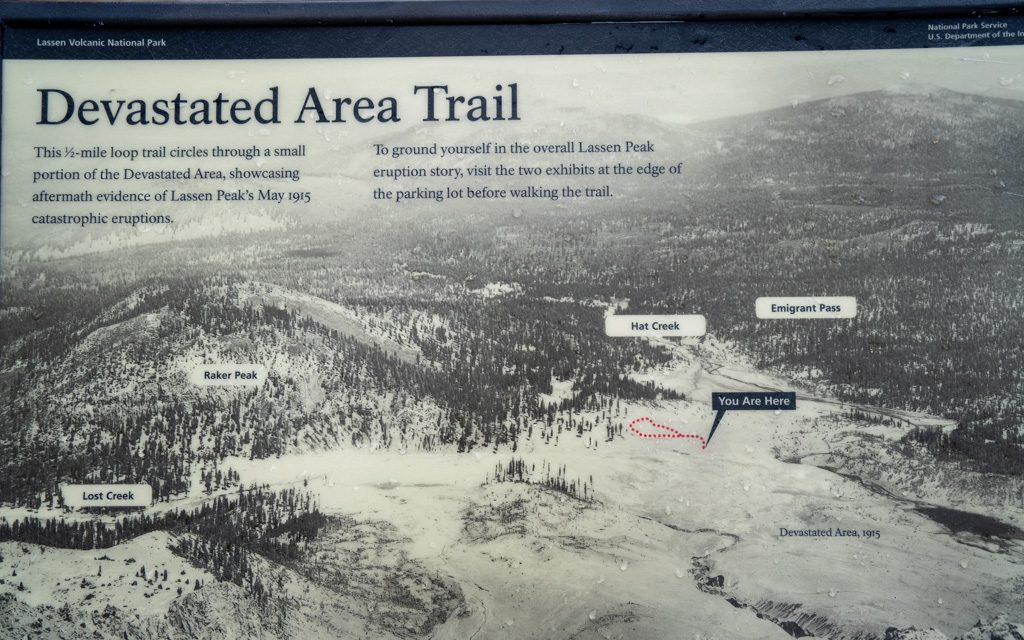
The area around the Devastated Area tells the story of the park’s explosive eruptions from 1914 to 1917. Massive mudflows and volcanic debris wiped out forests across the region, and even today the landscape still carries scars from the eruption.
Devastated Area Interpretive Trail
Distance: 0.5 miles
Elevation Gain: Minimal
Difficulty: Easy
This short interpretive trail is worth stopping for, especially if you want to understand the geology and eruption history before tackling longer hikes.
You’ll walk past lava rocks, volcanic deposits, and recovering forest while learning how Lassen Peak dramatically reshaped the surrounding landscape during its eruptions.
Nearby, the Fantastic Lava Beds showcase rough, jagged lava flows that once moved through the region. It’s hard not to imagine the force it took to create terrain like this.
Cinder Cone Trail
Distance: 4 miles round trip
Elevation Gain: 850 feet
Difficulty: Moderate
If there’s one hike in Lassen that feels like another planet, it’s the trail to Cinder Cone.
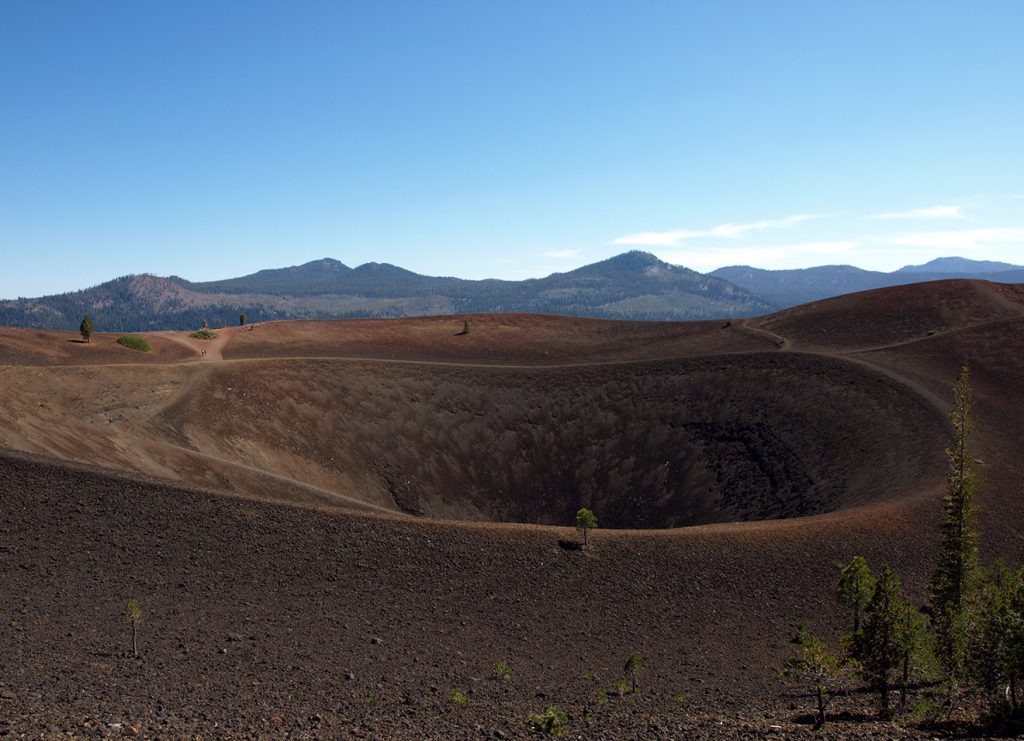
The hike starts through forest before opening into a massive volcanic landscape covered in black ash and lava rock. Then comes the steep climb straight up loose volcanic gravel to the rim of the cone itself.
It’s slippery, dusty, and completely worth it.
From the top, you get incredible views of the colorful Painted Dunes, lava beds, and surrounding volcanic terrain. The contrast between the black cinders and bright red, orange, and gold dunes is unreal.
Cinder cones form when blobs of lava are blasted into the air during eruptions and fall back down around the vent. Over time, those fragments pile into steep volcanic hills like the one you climb here.
It’s one thing to read about a volcano. It’s another thing entirely to hike directly up the side of one.
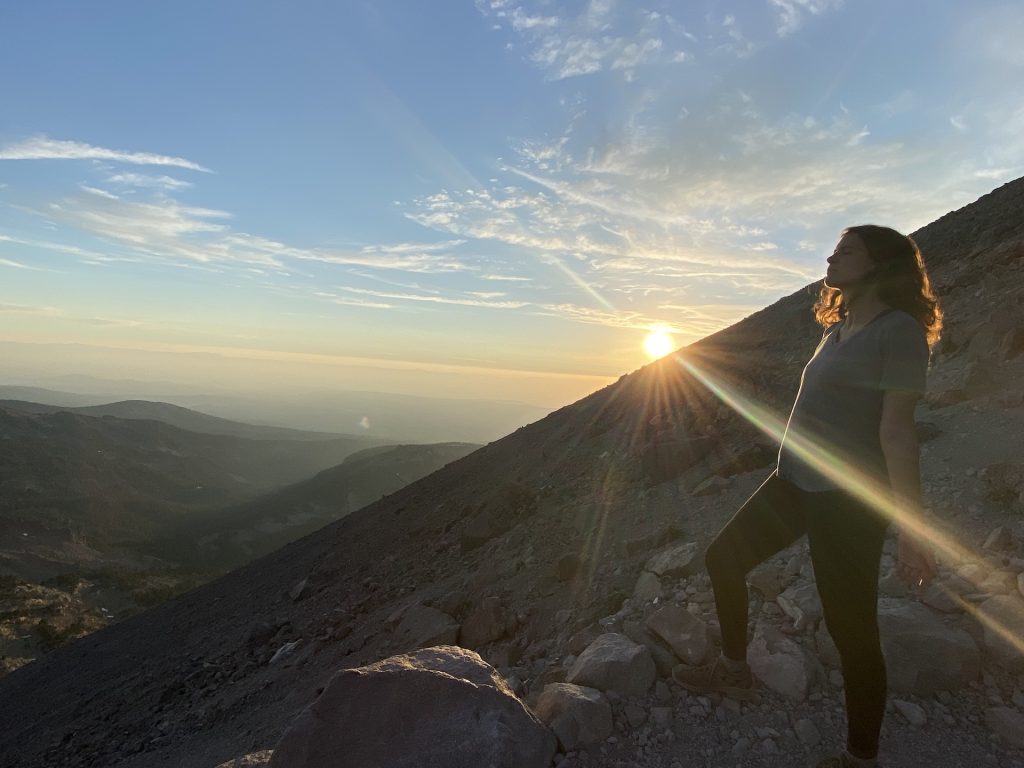
Lassen Peak Trail
Distance: 5 miles round trip
Elevation Gain: 2,000 feet
Difficulty: Strenuous
The hike to Lassen Peak is the park’s signature adventure.
And yes, your legs will absolutely feel those switchbacks.
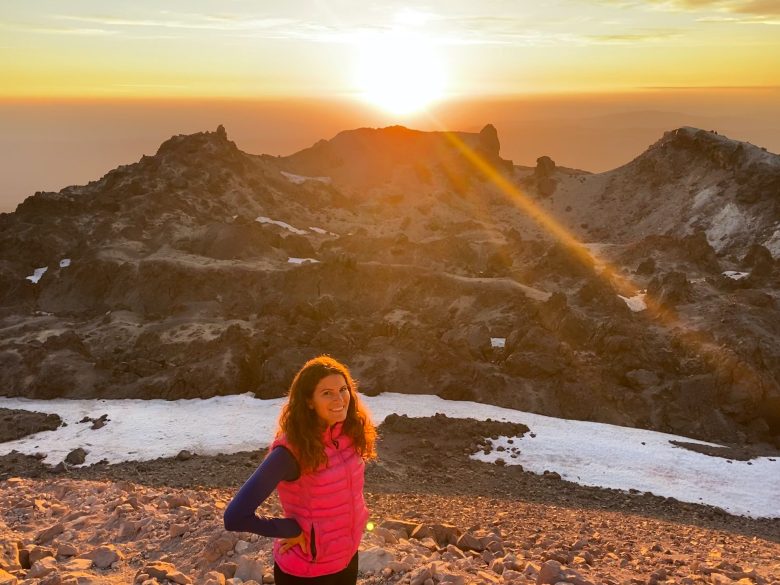
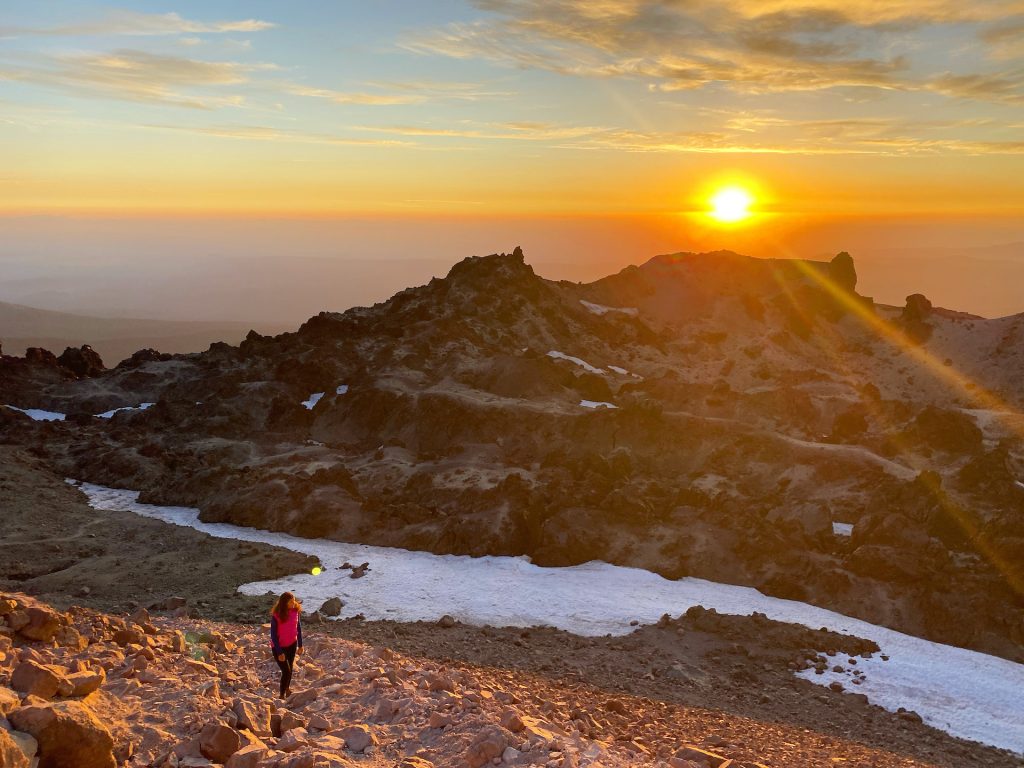
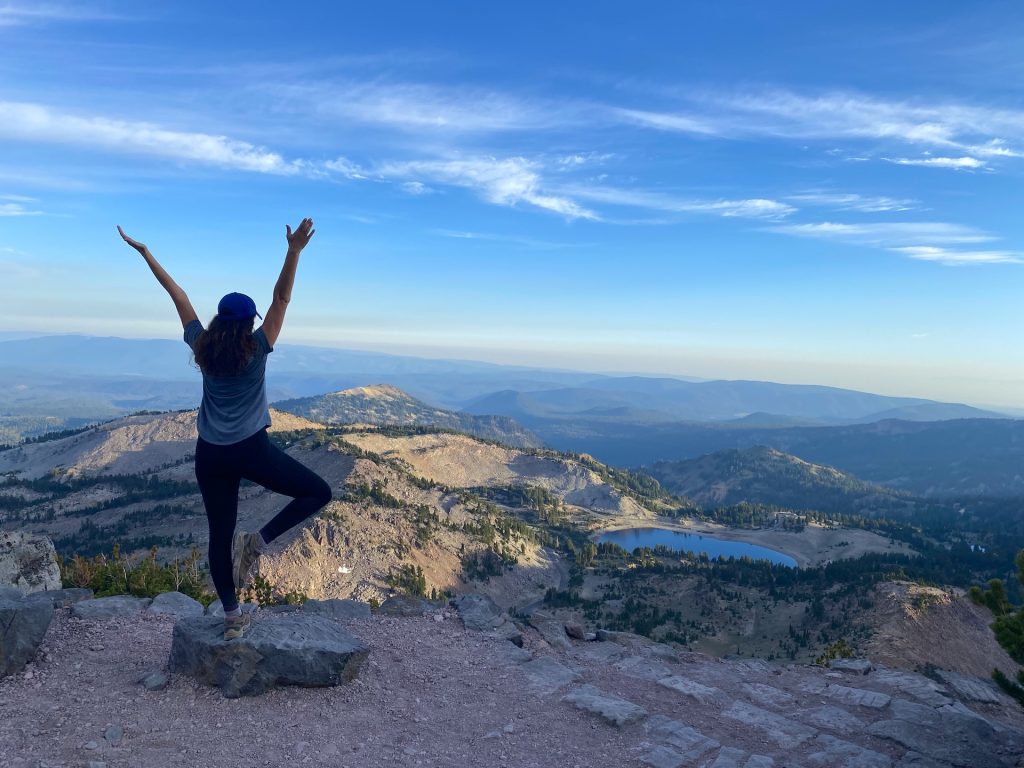
As you climb higher, the views just keep getting bigger. Snow patches often linger well into summer, and by the summit you can see lakes, forests, lava fields, and distant mountains stretching across Northern California.
On clear days, the landscape feels endless.
For me, standing on top of an active volcano definitely a thrilling experience!
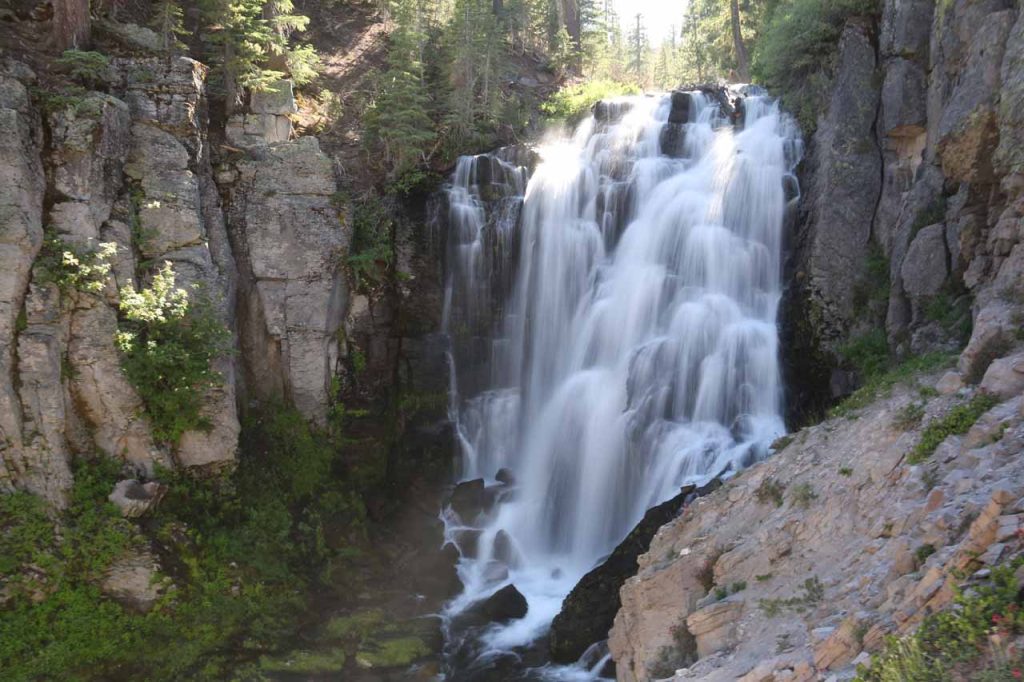
Kings Creek Falls
Kings Creek Falls is one of the most popular hikes in Lassen Volcanic National Park, leading to a beautiful 30-foot waterfall tucked within a lush volcanic canyon. The hike is approximately 2.3 miles round trip with about 500 feet of elevation change, making it a moderately challenging but rewarding outing.
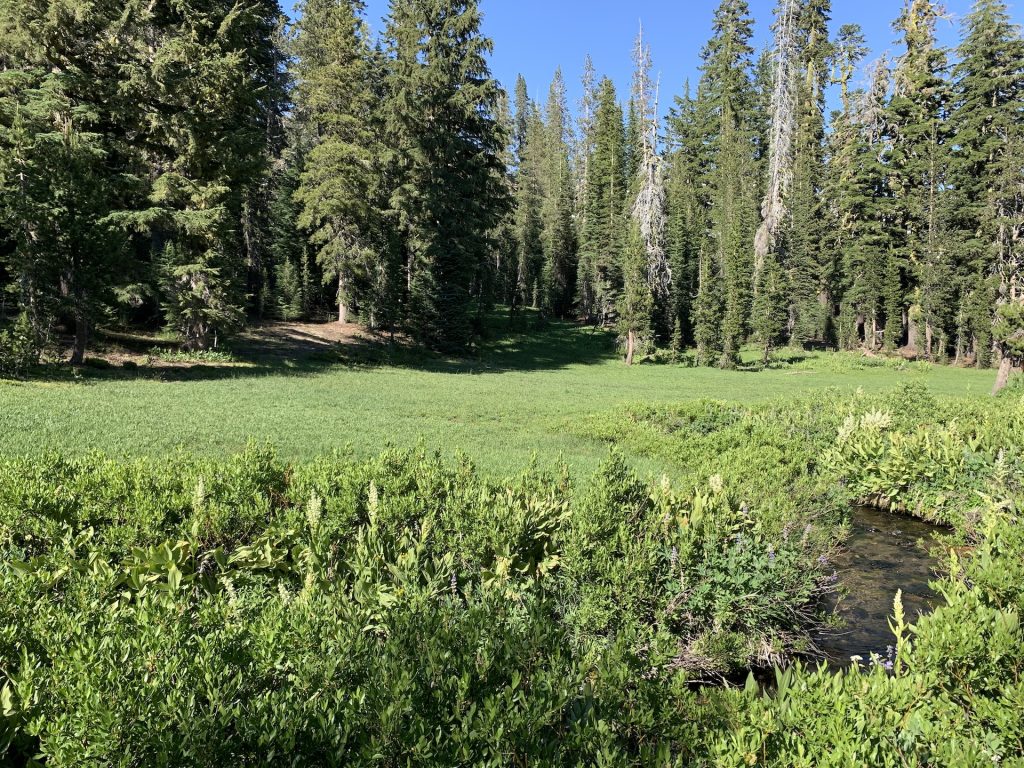
The trail passes through open meadows, volcanic landscapes, and alongside Kings Creek before descending to the falls. Along the way, hikers are treated to scenic views and a glimpse of the park’s diverse terrain. The waterfall is especially impressive in late spring and early summer when snowmelt increases the flow, making it a favorite destination for visitors exploring the park.
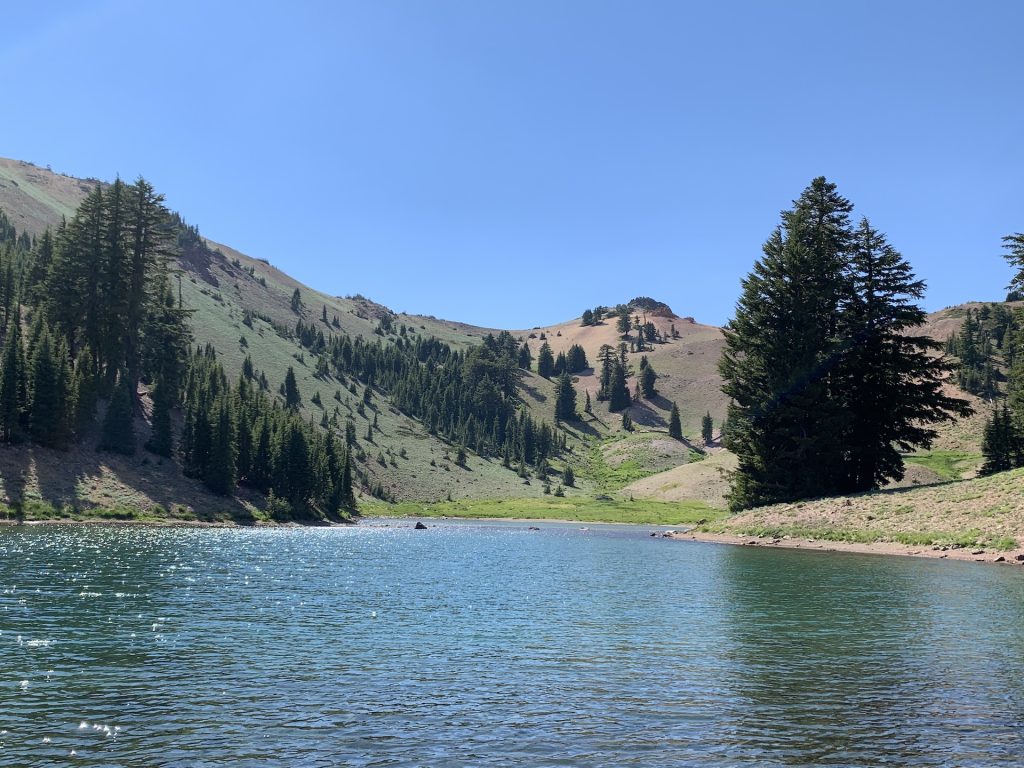
Ridge Lakes Trail
The Ridge Lakes Trail is a short but steep hike that leads to a pair of secluded alpine lakes nestled between Brokeoff Mountain and Mount Diller. The trail is approximately 2 miles round trip and gains about 1,000 feet of elevation, making it one of the more strenuous hikes for its distance in Lassen Volcanic National Park.
Beginning near the Sulphur Works area, the trail climbs through wildflower-filled meadows and forested slopes before reaching the tranquil lakes. Along the way, hikers are treated to views of Lassen’s volcanic terrain and nearby hydrothermal features. The combination of challenging elevation gain, alpine scenery, and relatively light crowds makes Ridge Lakes a rewarding option for visitors looking to venture beyond the park’s most popular trails.
Best Time to Visit Lassen
Lassen’s hiking season is surprisingly short because of heavy snowfall.
The best time to visit is usually:
- July through October for most trails
- Late July for wildflowers
- September for smaller crowds and cooler weather
Snow can linger well into summer, especially on higher-elevation trails like Lassen Peak.
Always check trail and road conditions before visiting because closures are common early in the season.
How to Get to Lassen Volcanic National Park
Lassen Volcanic National Park is located in Northern California, about:
- 3 hours from Sacramento
- 4 hours from San Francisco
- 2 hours from Redding
The easiest way to explore the park is by car since trailheads and viewpoints are spread out throughout the park.
Closest Airports
- Sacramento International Airport (SMF)
- Redding Municipal Airport (RDD)
Keep in mind that the park’s main road is seasonal and usually fully open from late spring through fall due to heavy snowfall.
Where to Stay
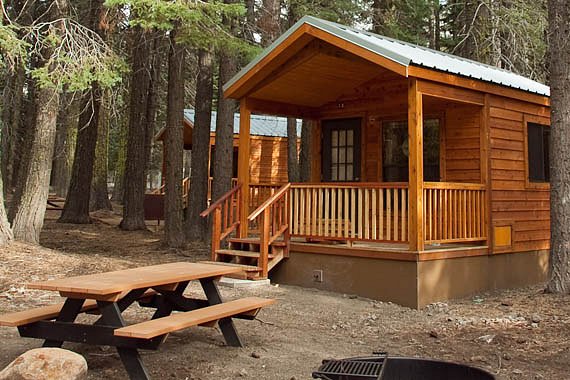
Camping Inside the Park
- Manzanita Lake Campground — scenic and convenient
- Summit Lake Campground — great central location
- Butte Lake Campground — best for hiking Cinder Cone
Nearby Towns
- Chester — best overall home base with lodging and restaurants
- Mineral — closest to the southwest entrance
- Redding — more hotel and dining options
Summer lodging and campgrounds book up quickly, so reserve early if you’re visiting during peak hiking season.
Final Thoughts
Hiking in Lassen National Park feels different from almost anywhere else in California.
The landscape constantly reminds you that this place was shaped by volcanic activity. Steam rises from the ground, volcanic peaks tower above alpine lakes, and every trail tells part of an ongoing geological story.
It’s wild, weird, beautiful, and somehow still underrated.
If you’re looking for hikes that feel a little more adventurous and a lot more unique, Lassen Volcanic National Park absolutely delivers!