
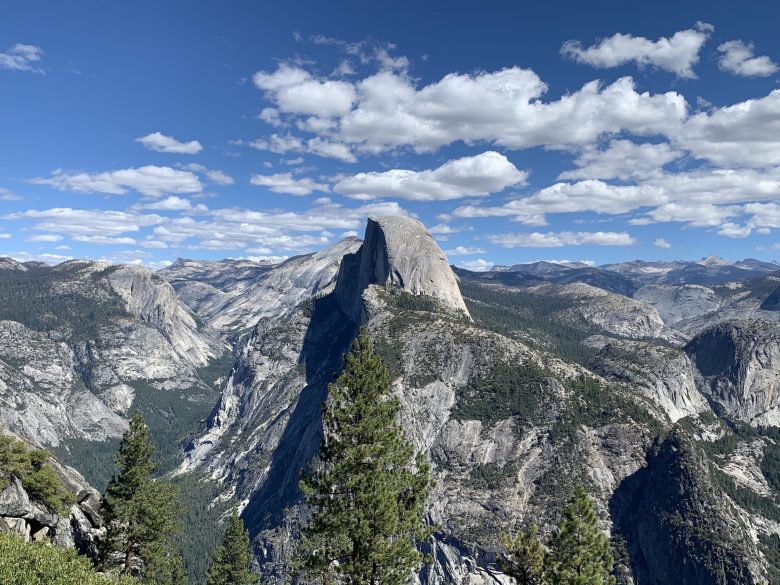
Yosemite National Park is my happy place! There are so many things that I adore about this slice of paradise… beautiful waterfalls, majestic granite peaks… And of course Half Dome!
Half Dome is a challenging hike that offers magnificent views of the Yosemite Valley. I’ll always remember the first time that I saw the valley, an unbelievable landscape took my breath away.
I love the Half Dome hike so much that I have done it twice! And I can’t wait to get back to hike it again!
The Half Dome hike is one of Yosemites most challenging and unique hikes!

Half Dome is one of Yosemites most recognizable landmarks. The top of this granite dome sits 4,800 feet off the valley floor at a total elevation of 8,844 feet.
The iconic trek up the famous cables of Half Dome in Yosemite National Park is a major bucket list item for adventure lovers, but this strenuous day hike takes some preparation and training!
Climbing Half Dome isn’t an adventure recommended for complete beginner hikers. The cable route is considered one of the most dangerous hikes in a U.S. national park.
All this being said, this is a totally doable day hike as long as you’re properly trained.
You’ll also need a lot of luck to snag one of the competitive hiking permits. However if the stars align and you’re physically prepared for the challenge, you are in for an epic adventure!!
PLANNING YOUR TRIP TO HALF DOME (WHAT TO KNOW BEFORE YOU GO)
I’ve summited Half Dome twice… both times with a group of friends. We applied for our permits in March, and received our “You won the Half Dome lottery” email in April. YAAAAAAAAY!!!
You have to have a permit in order to climb the subdome and the Half Dome cables. You will be turned around or fined if you do not.
A permit is required to hike to the top of Half Dome during the season when the cables are up. If you do not have a permit, you will only be allowed to hike as far as the sub dome, and rangers are typically stationed there to check for permits.
You may be tempted to hike Half Dome without a permit, but if you’re caught you could receive a fine.
To apply for a permit, visit the Yosemite National Park service website for more information.
WHERE TO STAY:
Because Yosemite is one of the most popular National Parks in the US, I highly recommend planning your accommodations in advance, especially during the summer months.
And since you’ll want to start hiking Half Dome very early in the morning, you’re going to want to come at least a day ahead of your hike, and likely spend the night somewhere in or near the park afterwards.
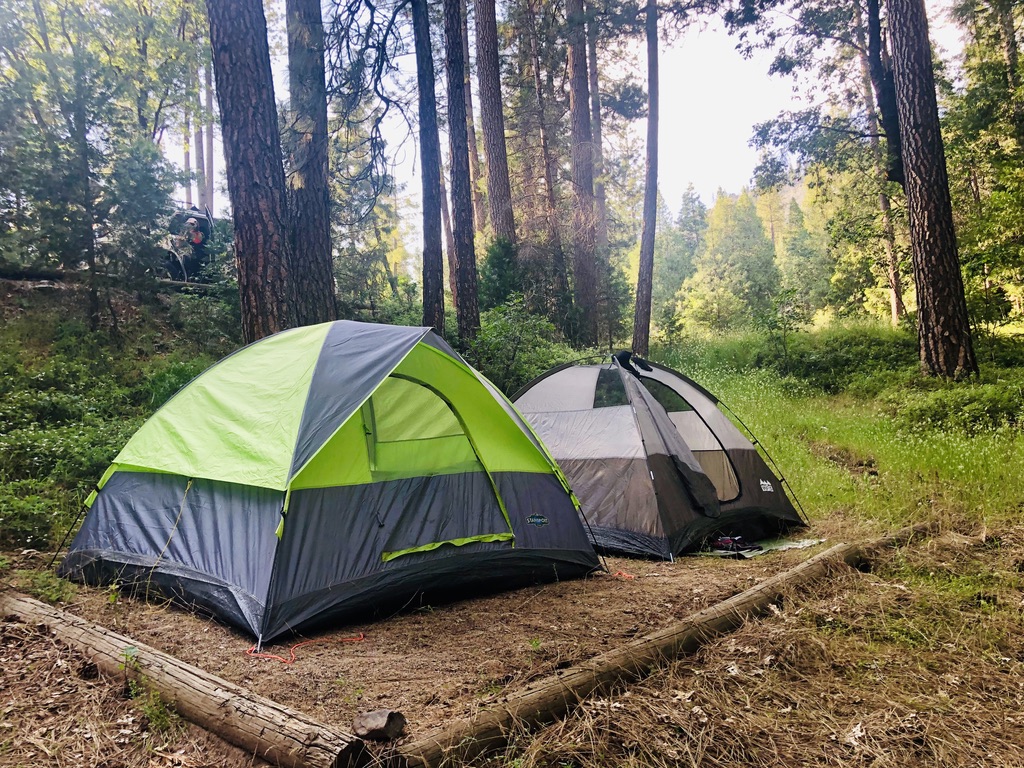
There’s a few campgrounds in Yosemite, as well as on the outskirts of the park.
Here’s a few personal recommendations where I have stayed:
-Airbnb (there’s lots of houses to rent in West Yosemite)
-Yosemite Lakes Campground
-Yosemite Pines RV Resort

WHEN TO GO:
The cables are up from Memorial Day through Columbus Day. It is possible to climb Half Dome when the cables are down, but I HIGHLY discourage that unless you’re an expert rock climber… or Spiderman.
If you want to see the spectacular waterfalls in all their glory, you’ll want to hike Half Dome earlier in the season when water levels are high.
June is an ideal time to hike Half Dome. It’s personally my favorite time of the year in Yosemite because the waterfalls are in full force from the snow melt.
HALF DOME TRAIL STATS:
Distance: 14-18 miles round trip (depending on if you take the Muir Trail or the Mist Trail)
Total Elevation Gain: 5,457 feet
Difficulty: Extremely strenuous
Length of time: 10-14 hours
Type of Trail: Out and Back

WHAT HIKING GEAR TO BRING TO HIKE HALF DOME:
- Your Half Dome Permit and ID
2) Day pack – You want to be hands free on the Half Dome Cables, so be sure to bring a backpack for your day hike. My favorite pack is Osprey women’s backpack.
3) Gloves — a necessity for climbing and descending the cables to protect your hands. I suggest bringing gloves that have good grip. The gloves that I recommend are Intra-FIT Climbing gloves.
4) Shoes with good traction – I recommend Oboz or any hiking shoe with good grip.
5) Merino wool socks — For long hikes, proper footwear is key! I recommend Smartwool socks.
6) Headlamp – Bring a headlamp + extra batteries
7) Clothing – It’s good to have clothes for warm and cold weather. The mountains have a forecast of their own. Be prepared, and bring layers… t-shirt, long-sleeved hiking shirt, rain jacket, and heavier coat
8) Food – If you want a hot meal for your hike, I recommend bringing a jet boil to make hot water and Backpacker’s Pantry meals… delicious and nutritious!
9) Water bladder – Water is essential on this hike! It’s good to have a water bladder like Camelbak (3 Liter capacity) to carry as much water as you can.
10) Water Filter – If you run out of water, you can filter water at the Merced River near Little Yosemite Campground. I recommend the Sawyer Squeeze filter.
NOTE ABOUT WATER: Just past the Vernal Fall footbridge, only 20 minutes into the hike, is a water fountain. This is the last chance for drinking water on the hike, unless you plan to filter water from the Merced River.
11) Electrolytes — Chances are that you will work up a sweat on this hike, and you will need to replenish the salt that you lose. Electrolytes are a great way to stay hydrated. On a hot day, I take one SaltStick Capsule per hour.
12) Sunscreen- I love Badger products because they use organic ingredients.
13) Hiking poles
14) GPS and/or AllTrails app- I absolutely LOVE the AllTrails app… download it to your favorite device.
Also, I carry a Garmin GPS device to track where I am. I highly recommend getting one because it has saved me from getting lost on many occasions, especially when I decide to explore off trail.
Disclosure: As an Amazon Associate, I earn from qualifying purchases.
Okidoke, we covered a lot of preparation tips for the Half Dome hike.
NOW IT’S TIME TO TALK ABOUT THE TRAIL!

WHICH TRAIL TO TAKE TO HALF DOME?
There are several ways to get to the top of Half Dome. Most people get there by hiking the 17 mile round trip route from the valley floor and taking the cable route to the top.
The Mist Trail is steep, and is almost like a huge, long stair case in some sections. Most people will enjoy going up this trail, but may have difficulty going down it.
If you’re feeling tired or have knee problems, opt to hike down the John Muir Trail instead of the Mist Trail. It’s easier going on your body as you hike down from the summit of Half Dome.
NOTE: This article covers the one-day hiking route that I took to Half Dome. I hiked up the Mist Trail and down the Muir Trail, one of the most popular hiking routes to Half Dome.
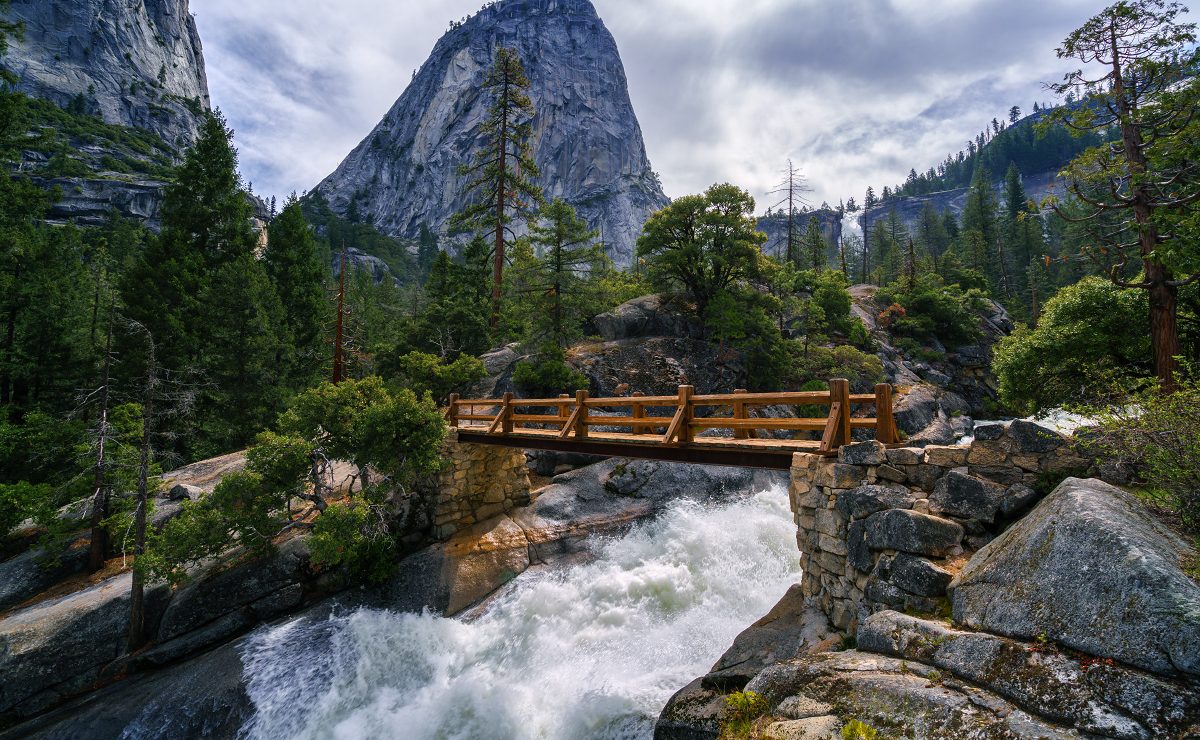
The trail starts at the valley floor and climbs up next to Vernal Falls and Nevada Falls. It passes behind the Liberty Cap, through Sequoia forests and then up the far side of the sub dome and Half Dome.

THE MIST TRAIL
The hike starts on the Mist Trail. The closest parking is the Yosemite Valley Trailhead Parking. From this parking lot, it is a half mile walk down a service road to the Happy Isles Bridge and the start of the hike.
I highly recommend starting the hike as early as possible. We started this hike very early, around 6am.
The first part of the Mist Trail is a paved trail that constantly gains elevation. It is steep at times. From the trailhead to the top of Vernal Falls is 1.5 miles.
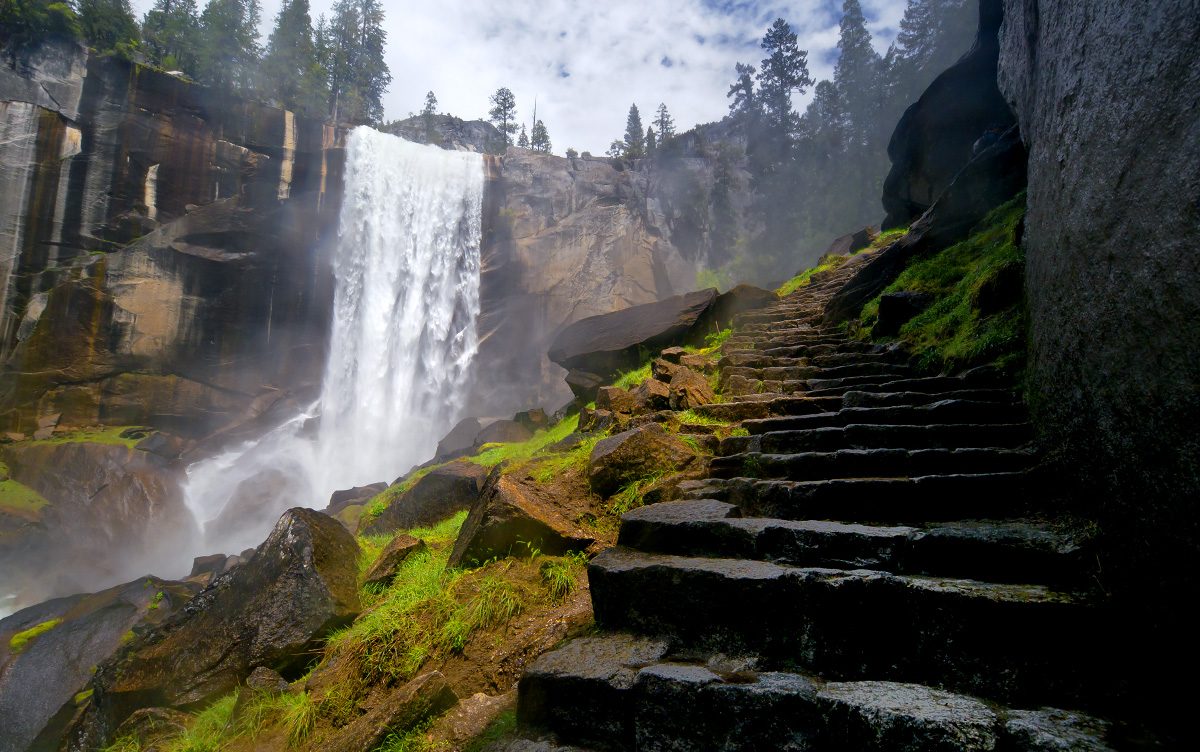
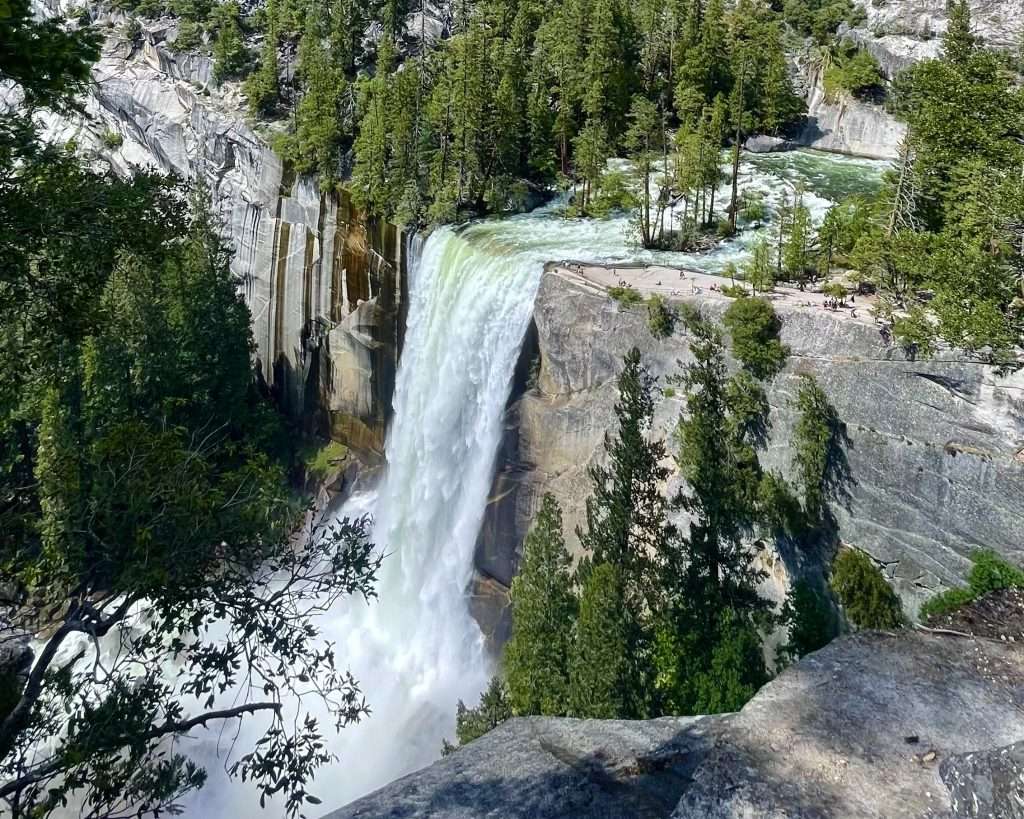
Past the footbridge, the trail climbs steeply and steadily to Vernal Falls. And this is where you understand where the Mist Trails earns its name. Long, slippery staircases wind uphill along the river and the falls. During this part of the hike, you might get drenched by the mist.
Both times that I did this hike was in June, and I got soaked on both occasions. The mist was blowing so strong and powerful that I felt as though I was hiking through a major storm. I plowed through this part of the hike, which I found to be fun as I enjoy an extreme challenge. You might want to wear a poncho to keep you dry.
Once at the top of the falls, there’s a spectacular viewpoint and a great place for a photo op.
The climbing continues up to Nevada falls. The trail winds through shady forest and lots of staircase switchbacks.
From Vernal Falls to Nevada Falls is 2 miles.
The trail splits near the top of Nevada Falls. Go left to continue to Half Dome. Go right to take the Muir Trail back down to the start of the trailhead.
After Nevada Falls, the trail levels out for a bit. After passing Little Yosemite Valley, the trail climbs through a forest of Sequoia trees. It’s not a hard climb, just a constant steady uphill walk.

THE SUBDOME:
When you reach the base of the subdome, this is where you need a permit to continue the adventure. A ranger typically sits there to check permits.
The sub dome is a mini granite dome that is connected to the back of Half Dome. It is a strenuous climb before you reach the Half Dome cables. By now you are at over 8,000 feet in elevation, and it gets challenging…but you’re getting close.
The subdome… 600 feet of elevation gain in approximately a quarter of a mile… a total leg buster!
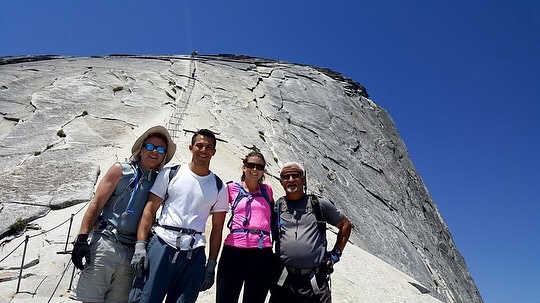
At the top of the subdome, you get the first close up view of the Half Dome cables.
CLIMBING THE HALF DOME CABLES:
Now the real fun begins!
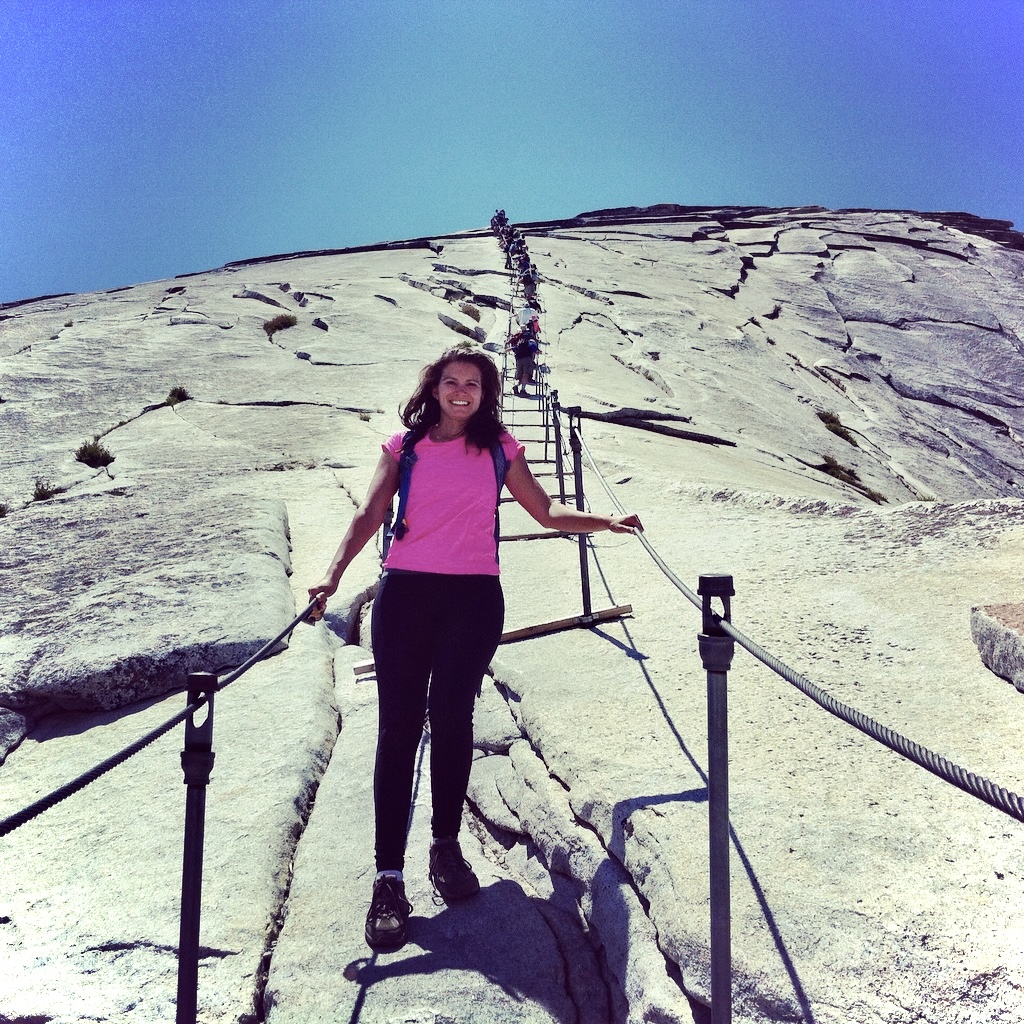
The famous “cables” section is very steep and exposed. This can prove both physically and mentally challenging for some.
NOTE: If you are afraid of heights, climbing the cables might not be for you.
My climb up the cables was slow and steady, stopping every few planks to rest. You share the cables with people going down as well, so it can get a bit tricky navigating it… communication with the other climbers is key!
The climb is hard! Don’t underestimate it!
Pace your footwork on wooden slabs spaced out on the climb as you get the upper body workout of a lifetime.
For me, it took a great deal of upper body strength to pull myself up the cables.
Is it worth it? HELL YES!
The granite surface has been worn smooth by the shoes of thousands of climbers before you.
It took approximately 20 minutes to climb the 400 feet up the Half Dome cables.
You may have to take breaks to allow for other climbers to climb down past you.
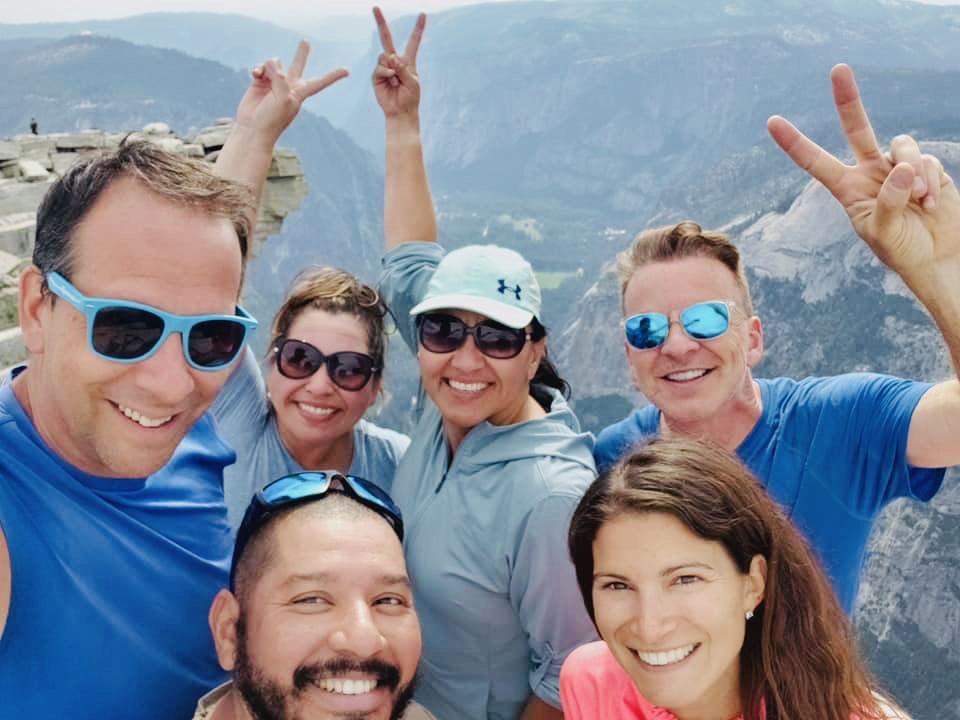
Its a major feeling of accomplishment… and relief… to finally reach the top! I made it!! Now I could relax and enjoy the views.
SAFETY TIPS FOR CLIMBING THE HALF DOME CABLES:
- TIP #1- Wear proper gloves and shoes with a good grip
- TIP #2- If you are very terrified of heights (as lots of people are), stay at the sub dome.
- TIP #3- If the conditions are rainy or snowy, do not attempt the cables
When you start making your way up the cables, it may feel a bit daunting, but you can do it!
- Take your time going up the cables. If you find you can’t keep going, turn around. Half Dome will be here in the future. There’s no shame in turning around.
- Always keep BOTH hands on the cables.
- I like to focus on one plank at a time as I go up the cables. There are planks of wood on the way up that make for good rest points.
I am sharing advice here that has helped me feel more calm and in control of my situation. The worst thing you can do is to panic on the cables. Take your time!

HEADING BACK DOWN
Once you get your pics on top of Half Dome and bask in the glory of your accomplishment, give yourself a pat on the back… you’ve earned the right to head back down. For me, going down the cables is more challenging than going up… So take your time, and savor the moment.
The Half Dome trail is an out and back trail, so retrace your steps back to the trailhead.
NOTE: Once you reach Nevada Falls, you have the option to take either the Mist trail or the Muir Trail. I prefer the Muir trail. The Muir Trail adds an extra 1.5 miles to the hike, but it’s not as steep as the Mist Trail and is much easier on the knees.
Hiking Half Dome is a major accomplishment. Once you do this hike, you will never look at Half Dome the same way again.

In the end, it was a fabulous experience. My friends, the scenery, the physical exertion, and — most importantly– the achievement of a goal.
Half Dome showed me that I am strong, brave, and capable of so much more than I ever thought was possible.
So there you have it, my guide to Half Dome. I hope this information helps you to have an epic adventure!
I’d love to hear about your Half Dome experience! Feel free to leave any questions or comments in the section below.
